
Business Specialty Visa Plan Athletes Artists Entertainers Visa
The P visa category was specifically created to welcome certain kinds of individuals on temporary visits to the US, including outstanding athletes, athletic teams, artists and entertainment companies (including circuses) who have a job offer from an American employer. There is no annual limit on the number of people who can receive P visas.
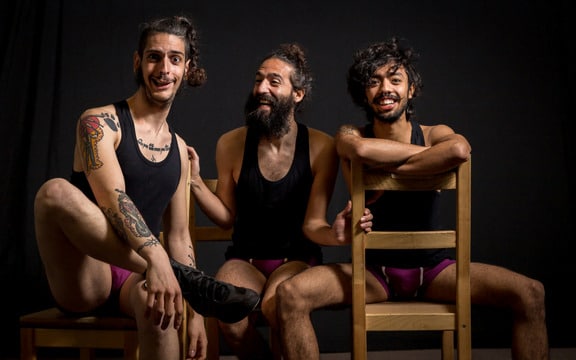
Athletes, Artists and Entertainers P visa
Let’s say your name is Cristiano Ronaldo and you’re a world-famous footballer. Or you have the strange stage name of Capital Bra and are Germany’s most popular, highest musician. Or you’re Turkey’s most famous circus fire-eater. One day you’re invited to visit the United States to give a master class in football, or a series of music performances across, or just perform as part of a circus tour. What visa would get you into the USA?
The P visa category was specifically created to welcome certain kinds of individuals on temporary visits to the US, including outstanding athletes, athletic teams, artists and entertainment companies (including circuses) who have a job offer from an American employer. There is no annual limit on the number of people who can receive P visas.
There are three main visas under the P-1 visa category:
P-1 — For athletes, athletic teams and artists that have been internationally recognized as outstanding, or entertainment companies that have been nationally recognized as outstanding.
P-2 — artists or entertainers either individually or as members of a group, who will perform in the US as part of a reciprocal exchange program between the US and one or more other countries. This visa includes all essential support personnel.
P-3 — For artists or entertainers who come to the US, either individually or as part of a group, to develop, interpret, represent, teach or coach in a program that is considered culturally unique.
Two visas come under the P-1 category, each with its own requirements.
P-1A Visa: For internationally recognized athletes and sports teams.
P-1B Visa: For internationally recognized entertainment groups.
Who is eligible for a P visa?
The eligibility criteria and requirements for each of the three P visas varies, as shown below.
P-1 visa: International recognition
To qualify, you must be an athlete or an athletic team with sustained international recognition for being outstanding. In the case of entertainment companies, sustained national recognition is a sufficient qualification.
Each performer of an entertainment company who wants to apply for a P-1 visa should have been an integral part of the group for at least one year, although up to 25% of them can be excused from this one-year requirement, if need be. This requirement applies only to performers and does not cover support personnel.
Circus workers are completely exempt from the one-year requirement.
P-2 visa: Reciprocal exchange program
If you’re an artist or entertainer, either as an individual or as a member of a troupe, who wants to perform in the United States under a reciprocal exchange program between the US and another country, you could qualify for a P-2 visa. The visa includes all essential support personnel.
P-3 visa: Culturally unique
If you’re an artist or entertainer who will be coming to the US either solo or as part of a group to develop, interpret, represent, teach or coach in a program that is considered culturally unique, you could be eligible for a P-3 visa. The program may be of either a commercial or noncommercial nature. The event or program you will take part in must contribute to a deeper understanding of an art form.
How do you establish ‘international recognition?
No matter whether you are an athlete, artist or entertainer applying for a P visa, solo or as part of a group, you have to prove that your work has been acclaimed in a sustained way internationally or nationally. Proving ‘international recognition’ or ‘national recognition’ is the acid test for anyone seeking this visa.
P-1A visa
If you’re an athlete or an athletic team seeking a P-1A visa for a specific competition or event, you must include documents to prove at least two of the following —
- Significant participation prior to entering the US.
- Participation in an international competition with a team.
- Previous participation in an intercollegiate competition in the US.
- Written statement from governing entity detailing recognition.
- Written statement from a sports journalist detailing recognition.
- Ranking in a relevant league, club, conference, or association.
- Earning significant honor, award, medal or trophy.
If you’re an athlete who will playing with a team in the US for a season, you must furnish documents that prove all of the following —
- The league, club, conference, or association in which you will play has six or more teams.
- The combined annual revenues of these teams is at least $10 million.
- The governing entity oversees competitors’ behaviors and applies rules or regulations on the sport.
P-1B visa
If you’re an entertainer or member of an entertainment troupe applying for a P-1B visa, you need to furnish documents that establish any three of the following —
- Previous or upcoming performances as a leading group in a production that received high praise from critical reviews, gained advertisements or endorsements, or was well-publicized.
- Acknowledgement and praise in publications such as newspapers, trade journals, magazines, or third-party websites in the relevant field.
- Previous or upcoming performances for organizations that have distinguished reputations.
- Major commercial success, such as ratings, box office receipts, or sales.
- Significant recognition from special organizations, government entities, or other recognized experts in the relevant field.
- A large salary for the upcoming performance as compared to other similar groups.
P2 visa
Since you will be visiting the US to participate as part of a reciprocal exchange program, you will be required to prove the program’s legitimacy with a formal, written exchange agreement. Also, an American labor union should have been involved in the negotiation or agreed to the exchange.
P3 visa
In this case, you will need to prove that the program in which you will be participating is culturally unique. Since the initial application will be made on your behalf by the person or agency that is employing you, they will have to submit documents or evidence to prove or establish one of the following —
Statements from recognized experts attesting to your authenticity (or your group’s) and skills in performing, presenting, coaching or teaching the unique or traditional art form; OR
Reviews in newspapers, journals, or other published materials as evidence that your (or your group’s) art form is culturally unique and that the performance will be culturally unique.
How long can you stay in the US on a P visa?
The duration of the visas varies with the nature of the visa holder field and the work, engagement or event that will occupy them in the US. More specifically —
An athlete’s P-1 visa will be granted for a maximum of 5 years, after which it may be extended for another 5 years for a total of 10 years. After this maximum 10-year period is over, you must return to your home country.
Team athletes will be allowed a maximum stay of 1 year on a P-1 visa, although this may be extended annually in one-year increments.
Entertainment groups will also be subject to maximum US stay of 1 year on their P-1 visas, with annual extensions possible in one-year increments.
The P-2 and P-3 visas will usually be valid for the duration of the event or program for which you were invited to the US, subject to a maximum of a year. This may be extended in increments of a year as long as the work remains incomplete.
All P visas allow unrestricted travel within the US, allow part-time studies, perform for prize money, allow you to bring spouse and children to join you on P4 visas, and apply for adjustment of status and lawfully seek to become a permanent resident of the U.S.
How do you apply for a P visa?
The process of application cannot start until an organization or institution in the United States decides to invite and employ you. The first stage of the process is initiated by the employer. Although there may be small differences in the exact process and documents between the P1, P2 and P3 visas, in general, the following steps are required —
- Your employer or agent in the USA files a Form I-129 petition with the US Citizenship and Immigration Services (USCIS) requesting permission for you to enter and work temporarily in the United States on a P-1, P-2 or P-3 visa. They will be required to pay the $460 application fee and furnish the necessary documents. If the USCIS approves the petition, they will send an approval notice on Form I-797 to your employer or agent, who will send it to you.
- Written consultation from an appropriate labor organization.
- Itinerary with the dates and locations of the performances.
- A copy of the contract between them and you or a summary of terms of the oral agreement under which you will be employed.
- Appropriate documents that help establish your or your group’s eligibility as well proof of international or national recognition. The various eligibility requirements for each of the three P visas have been listed earlier in this guide.
- In the case of a group, a statement from the employer listing each member of the group and the exact dates for which each member has been a regular full-time employee of the group.
- Find your nearest US Embassy or Consulate. You can find the address online or by checking the global list of US Embassies and Consulates. Make a note of the address. You will need it in the next step.
- Apply for a Non-Immigrant Visa online through form DS-160: You can apply online for a Non-Immigrant Visa, called Form DS-160. To do this efficiently and successfully, keep the following at hand before going online —
– Your passport
– A visa photograph (to upload). Make sure the photograph conforms to US Immigration photo specifications
In addition, you may need to supply:
– A travel itinerary
– The dates of your last five visits to the US (if applicable) and/or evidence of your international travel history within the past five years
– A resume or CV
– The US Embassy or Consulate where you will apply for an interview
– Additional information depending on your purpose for travel
More information about filling out the DS-160 form is available online. Remember to print out the DS-160 application confirmation page after completing the form. You will need it at the interview.
- Schedule your visa interview. Contact the US Embassy or Consulate nearest to you, preferably the one you named on the DS-160 form, and schedule your interview. Since different embassies have different waiting periods, check at the embassy’s website to find out how long you’ll have to wait.
- Pay the visa application fee: This is $190 for a P1, P2 or P3 visa, and can be paid online. Be sure to print out a receipt confirming your payment. You will need it at the visa interview later. In some countries, this fee is payable at the time of your interview, and in others it must be paid in advance.
- Gather the necessary documents. You will need the following —
- Passport with validity for at least six months beyond your intended period of stay
- Visa interview appointment letter
- Photograph. Some embassies may require a copy, especially if you were unable to upload an appropriate one while applying. A complete description of the format requirements is here.
- DS-160 confirmation page
- DS-160 visa application fee receipt: Required only if the fee was paid prior to your interview)
- Form I-797: USCIS approval notice for your engagement sent to your employer or agent in step 1
- Employment contract. If you have a written contract with your US employer, carry that. If the agreement was just oral, the rules allow you to submit a summary of the terms if no written contract exists. Proof of an oral agreement may include emails, a written summary of the terms, and so on.
In addition, you will need the following documents —
- An advisory opinion, also called a written consultation, from one of your peers or leaders with expertise in your field. This document should describe your ability and achievements in your area of specialty, the duties you will perform in the US and whether those duties require a person of ‘extraordinary ability’. The opinion may just state “No objection.”
- A document explaining the activities and events you will take part in while in the United States, with starting and ending dates for each, and your itinerary during this period.
- Proof of your extraordinary abilities or achievements. For details of what is acceptable here, refer to the earlier section on How do you establish ‘extraordinary ability’ or ‘achievement’?
- Go for the visa interview. This final step is the most crucial, and will determine whether you get the P-1B visa. Keep in mind that one of the most common reasons for visa denial is incomplete, inaccurate or fraudulent paperwork. If you’ve carried out all the previous steps diligently, this final step will be that much smoother.
The visa officer may request additional documents at his or her discretion and these requirements may vary from country to country.
How much does a P visa cost?
There can be up to three costs for getting a P visa —
Petition Form I-129: This will be filed by your employer and costs $460. You may be required to pay this cost.
P-1, P-2, P-3 visa application fee: This must be paid before the visa interview, and costs $190.
DS-160 Non-Immigrant Visa Application processing fee: This is currently US$ 160 but may be subject to change. Check with the local US Embassy or Consulate for up-to-date fees.
Visa Issuance fee: In some countries, an additional Visa Issuance fee may be charged when the visa is issued. Check with the local US Embassy or Consulate for up-to-date fees.
Need more help?
If you still feel that you would like to have professional help in making your application or would like to consult a lawyer who specializes in immigration and visa matters, you can explore some of your options, including how to access our exclusive list of professional immigration lawyers.
If you have questions or would like clarifications, please send us an email and we’ll do our best to get back to you within 24 hours with an answer.